Mandelic Acid: The Complete Dermatologist’s Guide

Mandelic Acid is a skin-friendly alpha hydroxy acid that takes on acne, wrinkles, pigmentation, and dullness to safely transform texture and tone in even the most sensitive skin.
Because we get so many questions about this magical multi-tasker, we’ve pulled everything together in one comprehensive blog. Here's, the complete dermatologist’s guide to Mandelic Acid.
Table of content
What is Mandelic Acid?
Though it’s relatively new to the skincare world, Mandelic Acid has been used for nearly two centuries as a medicinal compound because of its anti-microbial and wound-healing properties.
Vivant formulator, Dr. James Fulton, was among the first to recognize and leverage the benefits of this unique multi-tasking AHA for skincare.
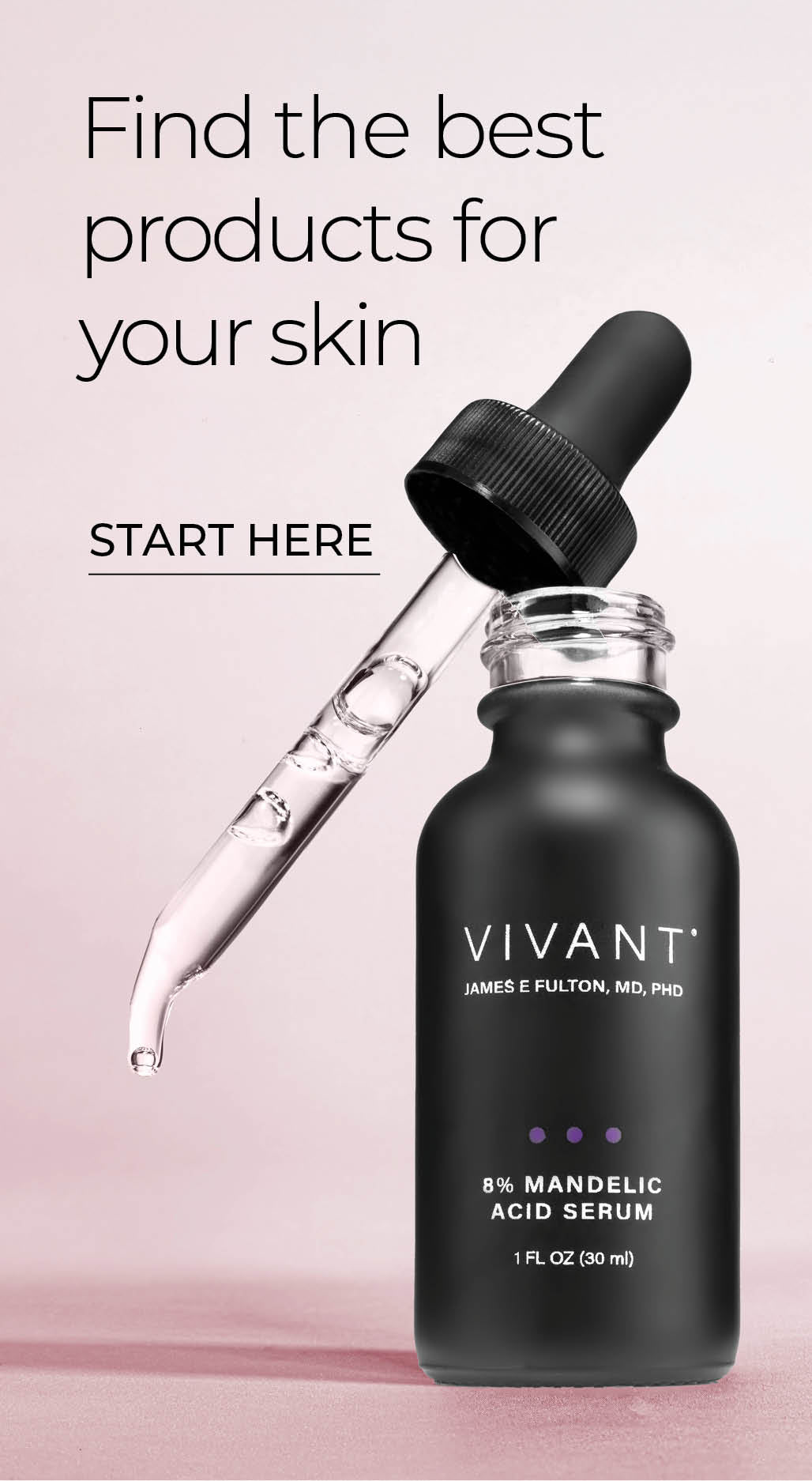
Award Winning Serum
How is Mandelic Acid Different from other Acids?
Mandelic Acid’s molecular structure is larger than other acids. The larger size slows its penetration into the skin, resulting in a more gentle action. But that gentleness doesn’t reduce its effectiveness. Mandelic Acid is more powerful than glycolic acid, but because of its slow penetration it is less irritating.
Like other AHAs, Mandelic Acid acts as an exfoliator, loosening and lifting dead skin cells to encourage renewal. In addition to micro-exfoliating properties, Mandelic Acid is an alpha hydroxy acid, known for its antibacterial and antifungal properties. Mandelic Acid is also known to help brighten the appearance of skin and improve the look of uneven tone, making it a great option for those seeking a more radiant, balanced-looking complexion.
The Benefits of Mandelic Acid
1. Helps improve the appearance of breakouts
Mandelic acid’s exfoliating properties help reduce the look of congested skin, promoting a clearer-looking complexion.
2. Brightens the appearance of skin
By gently exfoliating surface buildup, mandelic acid helps reveal fresher-looking skin and supports a more radiant, even-looking complexion.
3. Improves the look of uneven tone
Regular exfoliation helps enhance skin renewal, visibly improving the appearance of discoloration and promoting a more balanced-looking tone.
4. Smooths the appearance of fine lines and wrinkles
Mandelic acid supports surface cell turnover, helping skin appear smoother, softer, and more refined.
5. Refines texture and enhances radiance
By encouraging gentle exfoliation, mandelic acid helps improve the look of skin texture for a smoother, more luminous appearance.
Can I use Mandelic Acid every day?
As the gentlest of all the AHAs, mandelic acid is well tolerated by all skin types. You can safely use it every day, though higher percentages require acclimation. We recommend starting with the lower percentage products and moving up once your skin has become acclimated. If you do notice sensitivity, you can dial back usage to every other day.
Everyday Mandelic Wash
Does Mandelic Acid lighten skin?
Mandelic acid is known to help brighten the appearance of skin and promote a more even-looking tone. It works at the surface level to gently exfoliate and improve the look of discoloration, including dark spots and uneven patches.
Through consistent exfoliation, mandelic acid helps support natural skin renewal, which can visibly refine tone and enhance overall radiance. This process helps diminish the appearance of uneven pigmentation, leaving skin looking clearer and more balanced.
Can I use mandelic acid with other acids or retinoids?
Mandelic acid is such a multi-tasking wonder you can use it on its own and expect excellent results. That said, there is nothing like an acid blend to brighten and boost skin radiance.
Complementary acids can work synergistically to accelerate results. But acids are chemical exfoliators, and too much mixing and matching could result in irritation depending on your skin. Just be sure to consider the characteristics of other acids before pairing, especially if you have sensitive skin.
An example of a complementary pairing is Mandelic Acid with salicylic acid. Mandelic Acid’s antibacterial qualities combined with salicylic acid’s ability to go deep into the pore to peel out dead skin cells make the two an acne-fighting power couple.
Retinoid and Mandelic Acid can be a synergistic combo. Each targets acne, signs of aging, and hyperpigmentation. Mandelic Acid’s exfoliating effects enhance penetration of retinoids to optimize results. The antibacterial propeties of mandelic acid maximizes the acne-fighting benefits in this highly effective pairing.
They can be used in the same application, but most find a routine of mandelic acid in the morning and retinoids at night to be the magic formula.
How long does it take for mandelic acid to work?
Skin may appear smoother, more refined, and visibly brighter soon after use. With continued use, the look of congested pores and uneven tone may improve, supporting a clearer, more balanced-looking complexion. Over time, discoloration can appear less noticeable, revealing a more even, radiant appearance.


Comments